
Future Energy Solutions
Frequently Asked Questions

From Solarmatic
Frequently Asked Questions
How does solar PV work?
Solar Photovoltaic (PV) panels are generally fitted on the roof in a northerly direction and at an angle to maximize the amount of sunlight that hits the panels. Solar PV panels on the roofs of homes and businesses generate clean electricity by converting the energy in sunlight. This conversion takes place within modules of specially fabricated materials that make up the solar panels. It is a relatively simple process that requires no moving parts. In most cases, solar panels are connected to the mains power supply through a device called an inverter.
Solar panels are different to solar hot water systems, which are also mounted on household roof-tops but use the heat from the sun to provide hot water for household uses.
The technology to convert sunlight into electricity was developed in the 19th century.
How much does it cost to install solar panels?
The price of solar systems has dropped dramatically over the past few years, making it an increasingly attractive option for homes and businesses.
The upfront cost of your solar PV system is affected by a number of different factors, including:
- Government incentives and support schemes available
- Contractor installation costs
- Type and number of solar panels, which affect the output of your system in kilowatts (kW)
- Type and size of the inverter (the part of the system that converts the electrical output of your solar panels into AC electricity for use in your home or business)
- Type of farming equipment and other system components
- Height and accessibility of roof and whether it is tiled, metal or concrete
- Any after-sales service agreements
How much money will I save with solar panels?
The amount of money your household will save on power bills by going solar is affected by a number of factors, including:
- Your energy consumption and the size of your solar power system – if you use more power than your system is capable of producing, your savings will be reduced. This can be avoided by choosing the right-sized system for your needs.
- Your feed-in tariff– this is the amount your electricity retailer pays you for any excess power your solar panels generate.
- Your usage patterns – solar panels can only generate electricity while the sun is shining. This means that households that use a lot of power during the day may attract greater savings than those that consume most of their power at night. However, you will still receive a feed-in tariff for any excess electricity you generate during the day.
- Where you live– some areas of Australia receive a lot more sunlight than others, so a solar PV system in Brisbane will usually generate more power than one in Hobart.
How much power does a solar panel generate?
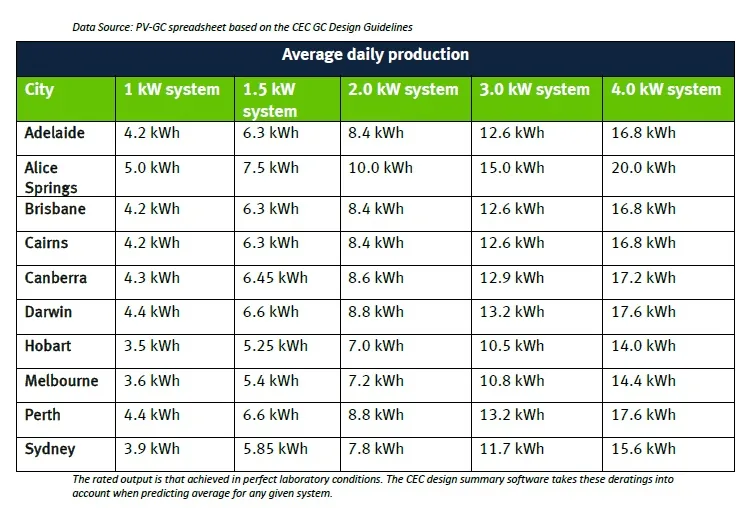
A typical Australian house consumes around 18-kilowatt hours (kWh) per day so a 1-2kW system displaces an average of 25-40% of your average electricity bill. Solar panels produce more energy in summer than they do in winter.
What size solar system should I install?
The size of your solar PV system will depend on:
- the physical unshaded area available for the installation of your panels
- how much you are prepared to spend
- What portion of your electrical consumption you wish to generate.
To work out what size solar PV system you require, you need to analyze your household’s daily electricity consumption. Your monthly or quarterly electricity bill measures your household’s electricity consumption in kilowatt hours. From this figure, you can calculate your average daily electricity consumption, and the average amount of electricity your solar PV system needs to produce to cover your electricity needs.